

The Critical 5: Why traffic in a logistics park must be understood as an operational system
Five engineering principles for managing vehicle circulation in logistics platforms
- Episode 9 -
A monthly insight series by IESYS
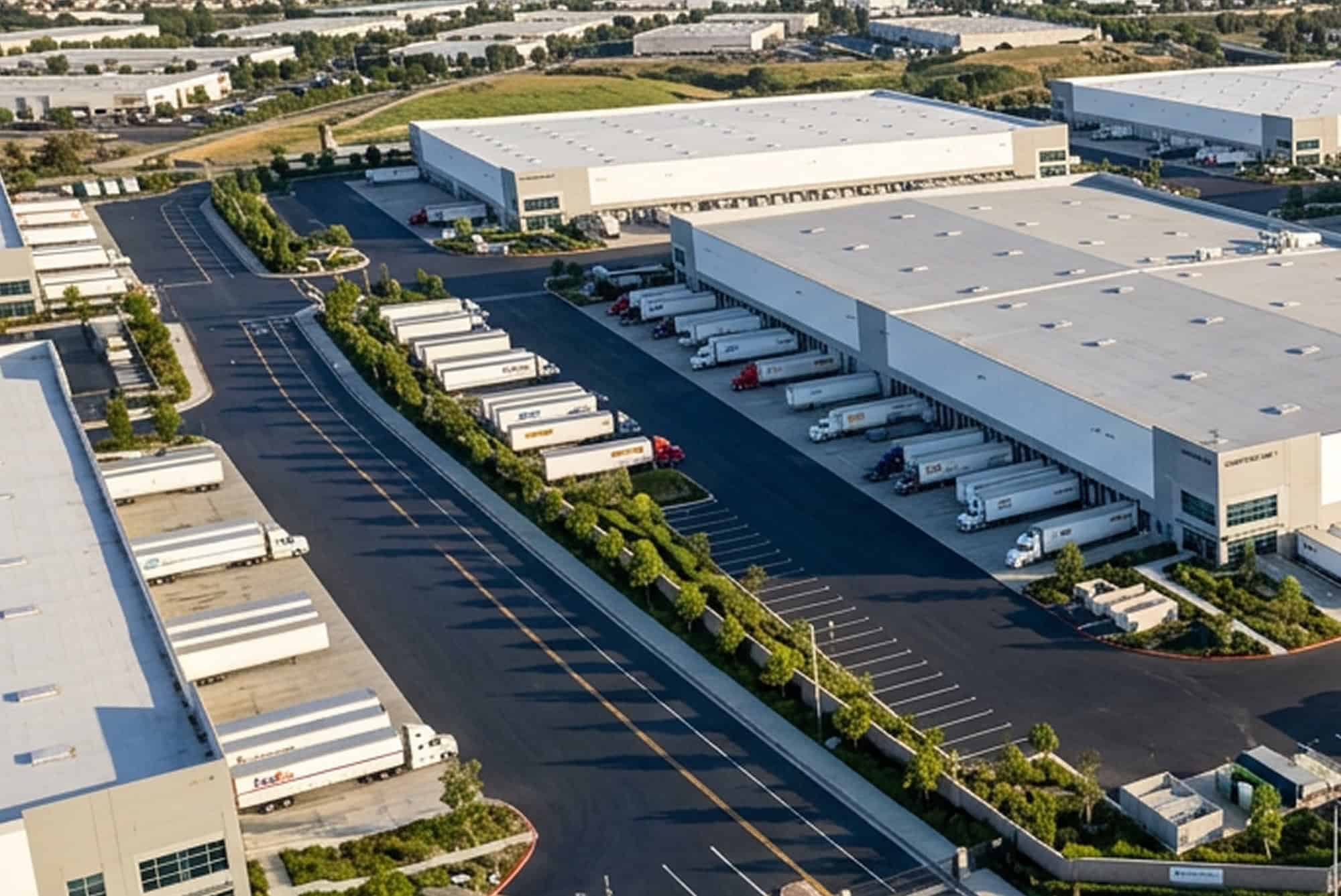
Traffic performance in a logistics platform is determined by the relationship between infrastructure, vehicle flows and the processes taking place within the site. The capacity of access points, the layout of routes, the availability of loading docks and the duration of loading and unloading operations must be assessed together, as constraints at one stage can affect the operation of the others.
A local expansion of infrastructure does not guarantee improved circulation if the next stage cannot absorb the additional flow. In such situations, congestion can shift to waiting areas or internal routes, affecting access and the execution of operations.
In road traffic management, system design and integration require the same attention to the relationship between infrastructure, detection, information and control. IESYS Group’s experience in this field provides a reference point for analysing traffic requirements in logistics platforms.
The five principles below highlight the aspects that need to be clarified before technical solutions are defined and implemented.
1. Infrastructure capacity must be aligned with the operational flow
The sizing of access points must be verified against dock capacity, processing times and the space available for vehicle holding. An entrance sized for a given traffic volume does not guarantee that the platform can handle the same volume under real operating conditions.
The difference becomes relevant during periods of concentrated arrivals, when dock processing capacity or waiting space can become the limiting factors. If the holding areas cannot absorb the temporary build-up of vehicles, this can affect internal circulation and access to other operating points.
In design, access sizing must be analysed together with the distribution of arrivals, the capacity of downstream stages and the space required to manage traffic fluctuations. Otherwise, a local intervention may shift the congestion point without improving the platform’s performance.
The same principle applies in road traffic management: the capacity of a section cannot be assessed independently of traffic conditions and the constraints of connected sections.
2. Equipment placement must respond to a control requirement
The placement of detection and identification equipment shapes the information available to the system and the decisions it can make during operation. For this reason, its placement must be determined by its operational role, not only by installation conditions.
In road traffic management systems, sensors, ANPR cameras and variable message signs serve different functions. Event detection, vehicle identification and the delivery of information to road users must be aligned with equipment positioning and with the point at which intervention is still possible.
The same requirement applies to logistics platforms. Identification points, access checks and the information used to direct vehicles must be positioned and sequenced so that the necessary decisions can be made before the vehicle reaches an area where routing options are limited.
These requirements must be established at the design stage. Once the infrastructure has been defined, correcting equipment placement or reorganising routes may require costly modifications and can disrupt operations.
3. Performance must be analysed through the relationship between subsystems
Compliance of each piece of equipment with its specifications does not, in itself, demonstrate that the integrated system meets its operational objectives. To identify constraints, both the data provided by the subsystems and the sequence of events they record must be analysed.
In road traffic management, sensors, ANPR systems, video cameras and WIM equipment provide complementary information on traffic conditions. Their usefulness depends on the role of each source and on the ability to correlate the relevant data.
In a logistics platform, the times of arrival, access, dock allocation and start of operations can be compared to identify the stage at which delays build up. Such an analysis requires data that is sufficiently complete, synchronised and correctly associated with vehicles or events.
Integration facilitates this analysis, but does not automatically establish the cause of a deviation. Conclusions must be verified against the actual execution of operations and the limits of the available information.
4. Monitoring must support operational decisions
Monitoring has operational value when it enables the identification of relevant deviations and the assessment of possible interventions. Collecting data without interpretation criteria and without clear responsibilities for intervention is not sufficient for traffic management.
In a logistics platform, relevant parameters may include waiting times, dock processing times, occupancy of holding areas and traffic conditions on internal routes. Their evolution must be assessed against normal operating patterns and the established operational limits.
In road traffic management systems, the analysis of volumes, speeds and occupancy can reveal changes in traffic conditions. Interpreting this data provides a basis for assessing the situation and selecting the available control measures.
In both contexts, monitoring can support the early identification of deviations, but it does not guarantee that all problems will be anticipated. To support intervention, the design must establish which parameters are tracked, which thresholds are relevant and which actions can be triggered depending on the situation.
5. Integration must include degraded operation scenarios
The architecture of an integrated system must define not only the data exchange between equipment, but also the dependencies between functions and the system’s behaviour when a component becomes unavailable.
In a logistics platform, access control, vehicle identification, weighing and warehouse management may depend on information provided by different subsystems. The unavailability of a data source or a communication outage can affect the operations that rely on that information.
Design requirements must specify which functions remain available, which operations can continue safely, when operator intervention is required and which conditions allow a return to normal operation. These scenarios must be verified during the integration and testing phase, not left until a failure occurs.
In road traffic management systems, the same discipline involves analysing the dependencies between detection, communications and control functions. Defining behaviour under degraded conditions is part of system design, not merely a subsequent remedial measure.
From equipment design to system design
The traffic requirements of a logistics platform must be defined in relation to vehicle flows, operational processes and the decisions that need to be supported during operation. Infrastructure sizing, equipment placement, data correlation and the handling of failure scenarios are aspects of the same design problem.
IESYS Group designs and integrates road traffic management systems for motorway and expressway infrastructure in Romania. Experience in this field underpins the engineering perspective presented in this article: detection, information, infrastructure and control functions must be designed according to their role in the operation of the system.
This perspective provides an analytical framework for defining traffic requirements in logistics platforms. Specific solutions must be determined for each site, based on the infrastructure configuration, vehicle flows and operational processes.
Learn more about IESYS experience: Traffic Management Systems.
From Challenge to Progress. WE Engineer.