

The Critical 5: BHS & BRS Adapted for the Railway Environment
- Episode 6 -
5 Critical Points in Transferring Airport Expertise to Railway Transport Infrastructure
A monthly insight series by IESYS
Railway transport infrastructure is going through a moment of transformation. Investment is growing, projects are multiplying and major railway stations are evolving into multimodal transport hubs with an operational complexity that increasingly resembles that of airports.
With this evolution comes a concrete question: can the engineering capabilities refined over decades in airports be successfully transferred to the railway environment?
The answer is yes. But not through replication, through adaptation. We confirmed this in practice by delivering a baggage handling and reconciliation solution (BHS & BRS) across 6 railway stations in Saudi Arabia.
Here are 5 critical points that define the difference between a BHS solution designed for an airport and one that works inside a railway station.
1. Passenger flow demands a different design logic
Airport environments are characterized by structured passenger processing, where check-in, screening and boarding follow predefined operational sequences.
In a railway station, the dynamics are different. Passengers arrive closer to departure, move more freely, and station layouts vary significantly. Operational timelines are tighter.
These differences are not just operational, they are design differences. In the Saudi Arabia project, flow-based system logic, automated routing principles, redundancy and fail-safe mechanisms all had to be rethought to match the actual behavior of passengers, including integration with the ticketing system. The goal is not to recreate an airport process inside a station, but to design a system that supports the way railway operations actually work.
2. Scaling across a network requires a different kind of standardization
In an airport, a BHS typically serves a single location. In a railway network, the same solution must operate coherently across multiple stations, each with its own particularities.
Across the 6 stations in Saudi Arabia, operators, maintenance teams and station personnel needed systems that behaved predictably regardless of location. Standardized control logic, harmonized operational workflows and common interfaces were essential to building a coherent operating model across the network.
The modular and scalable system architecture made this possible: each station could be configured according to its specific requirements without compromising the coherence of the control model at network level. When multiple stations operate on the same principles, training becomes simpler, maintenance becomes more efficient and operations become more predictable.
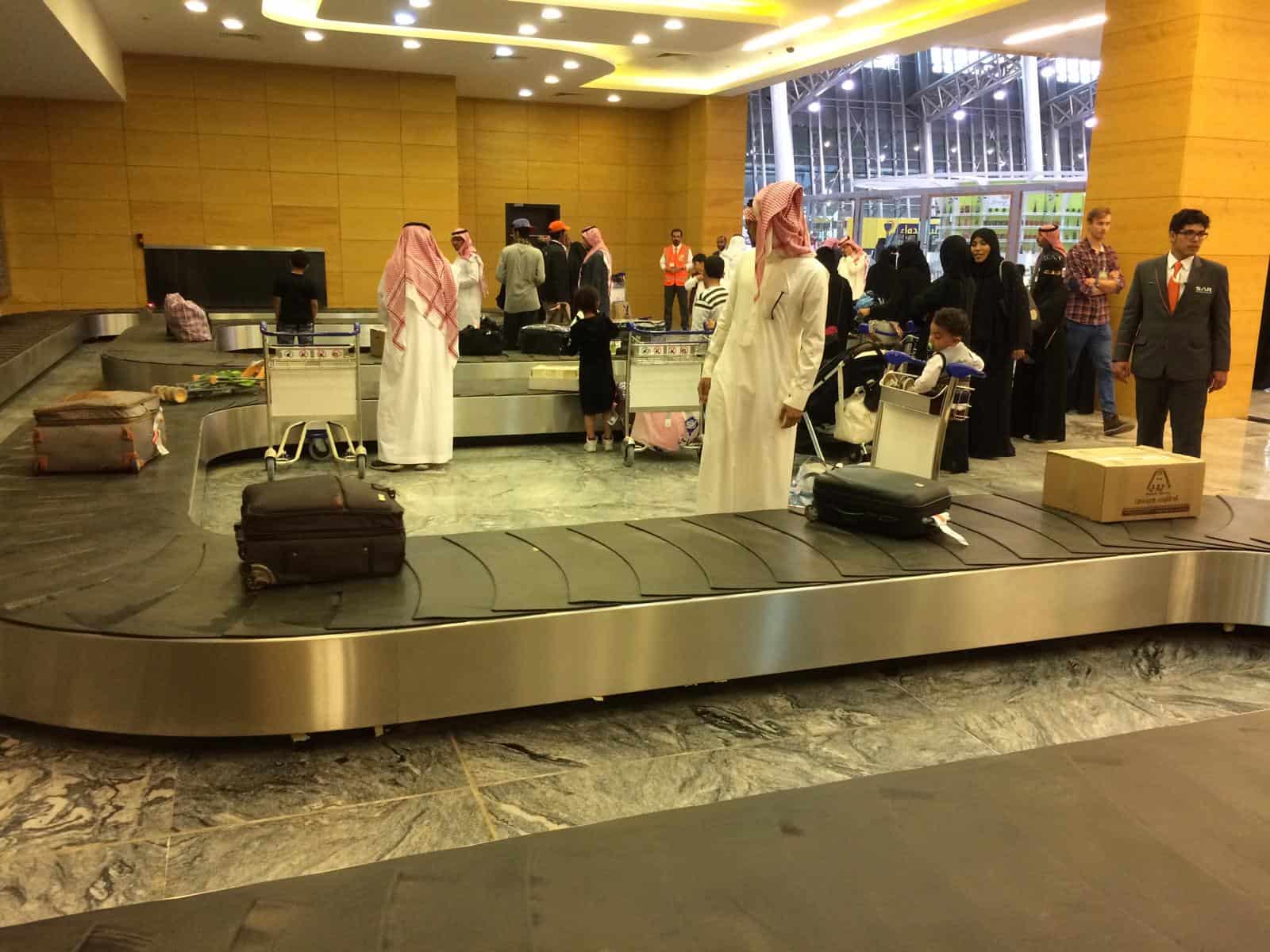
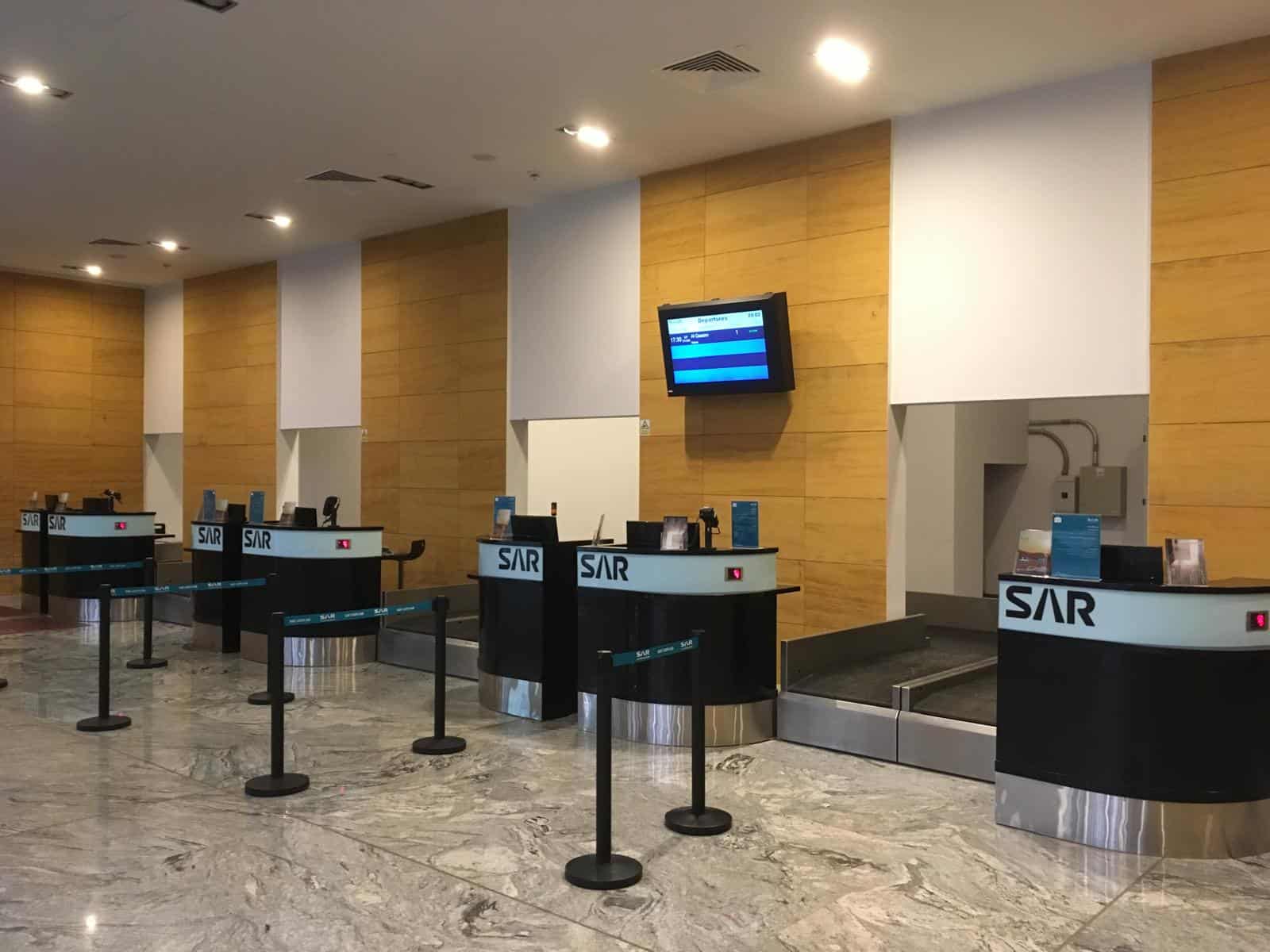
3. Screening must be designed as part of the flow, not added afterwards
Security is non-negotiable in any baggage handling operation, regardless of sector. But the way screening integrates into the flow differs fundamentally between an airport and a railway station.
Hold-baggage X-ray inspection systems, conveyor systems, routing logic and operator interfaces must function as a coordinated process, not as independent elements. In the project we delivered, the critical design decision was integrating screening as an inseparable part of the operational flow, not as an adjacent stage, but as a process built into the routing logic and exception handling.
When screening becomes part of the flow rather than an obstacle to it, both operational performance and the passenger experience are protected.
4. Local control remains essential, even within a centralized architecture
No matter how advanced the automation, infrastructure systems serve people and operators need visibility, real-time access to what is happening in the system, and the ability to intervene quickly when conditions require it.
In the solution delivered across the 6 stations, local HMI interfaces played a central role for exactly this reason: they gave station personnel direct access to alarms, operational status and system information, connected to the SCADA platform for infrastructure supervision. This architecture integrated local control with centralized supervision, bringing together alarm and event management, predictive diagnostics and system health monitoring into a single operational environment.
The role of technology is not to replace the operator, but to give them the tools for better, faster decisions.
5. Reliability is designed, not discovered
Infrastructure projects focus on technology. Operational teams focus on reliability.
Reliability does not come from intention, it comes from architecture: redundancy built into the system, fail-safe mechanisms and exception handling logic are what sustain long-term operational stability. In Saudi Arabia, the 6 stations confirmed this principle: the best BHS systems are not necessarily the most complex, but those that perform consistently under real operating conditions, day after day, station after station. Reliable baggage movement, accurate reconciliation at every stage and stable operation across multiple locations create lasting value for operators and passengers alike.
Transferring expertise between sectors is not a theoretical exercise
As railway transport infrastructure attracts growing investment and projects increase in complexity, the ability to transfer proven capabilities from other sectors becomes a real advantage, not just a talking point.
The technologies may be familiar and the engineering principles may be proven, but the railway environment comes with its own requirements, constraints and operational realities. Understanding them and designing around them is what turns a technical solution into one that actually works.
Our journey, from industrial automation, to airport systems integration and, today, to cross-infrastructure engineering and integration projects, reflects exactly this capability: transferring proven expertise between sectors while adapting it to the requirements of each operational environment.
IESYS Group has the experience of transferring BHS logic from airports into railway transport infrastructure. If you are working on a project involving baggage handling, reconciliation or systems integration, the conversation can start here.