

ECAC Standard 3: Key Engineering Decisions in a Baggage Handling System Retrofit Project
Implementing ECAC Standard 3 begins with understanding the existing infrastructure, not with selecting equipment
Implementing ECAC Standard 3 is one of the most complex upgrades an operational airport can undertake. The central challenge is not installing a new generation of screening equipment, but integrating it into a Baggage Handling System that must remain operational throughout the works and maintain its performance after the upgrade is complete.
Decisions regarding the reuse of existing infrastructure, baggage flow architecture, control system integration and implementation strategy directly affect project complexity, operational risks and long-term operating costs. Most difficulties that arise after commissioning have their roots in choices made during the design phase, not in the equipment installed.
This article examines the key engineering decisions underpinning a BHS retrofit project for ECAC Standard 3 compliance.
1. ECAC STANDARD 3 CHANGES THE SYSTEM ARCHITECTURE, NOT JUST THE SCREENING TECHNOLOGY
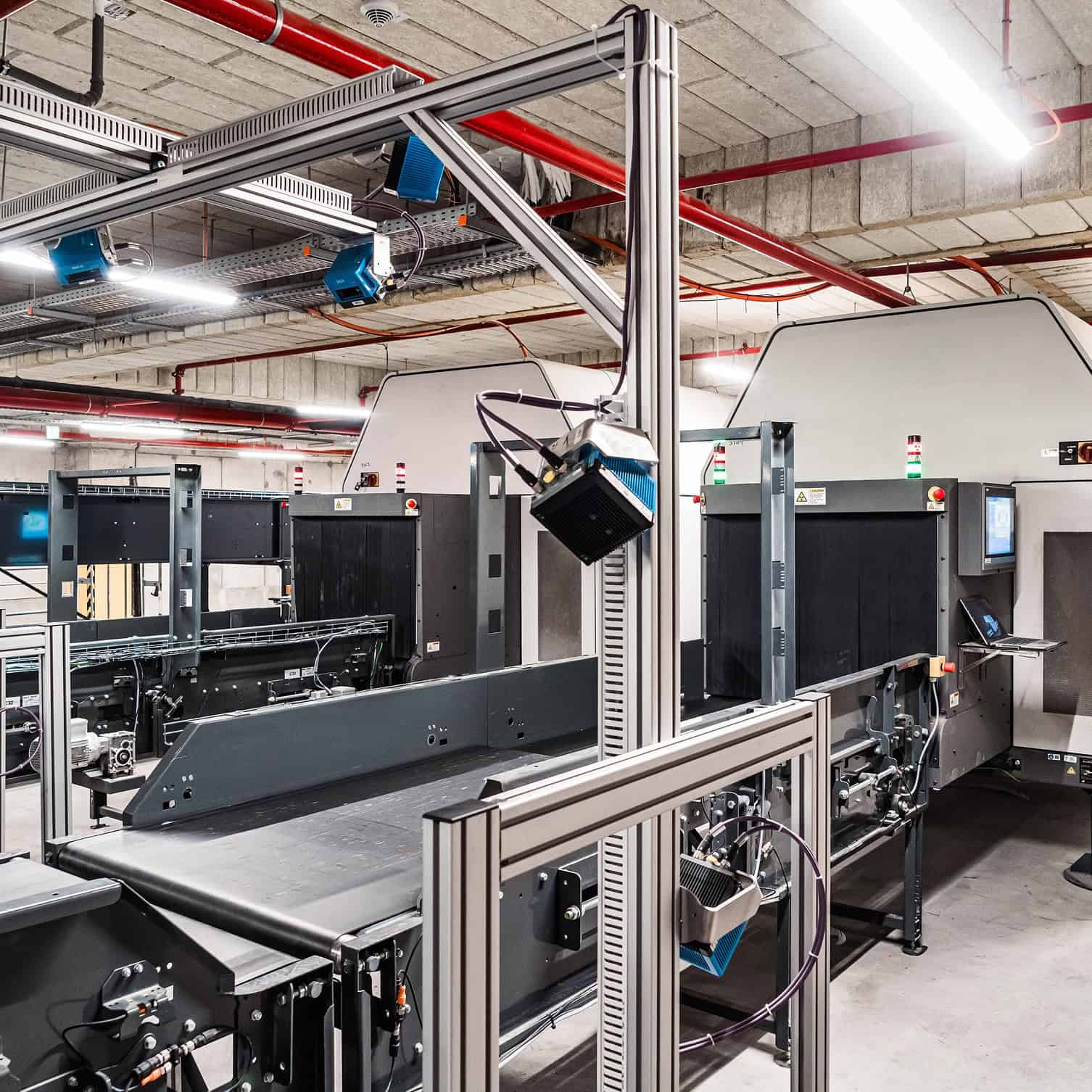
ECAC Standard 3 introduces higher requirements for the automatic detection of explosive materials, based on CT (Computer Tomography) equipment. The impact on a Baggage Handling System (BHS), however, goes far beyond scanner replacement: the new standard redefines the architecture of the entire system.
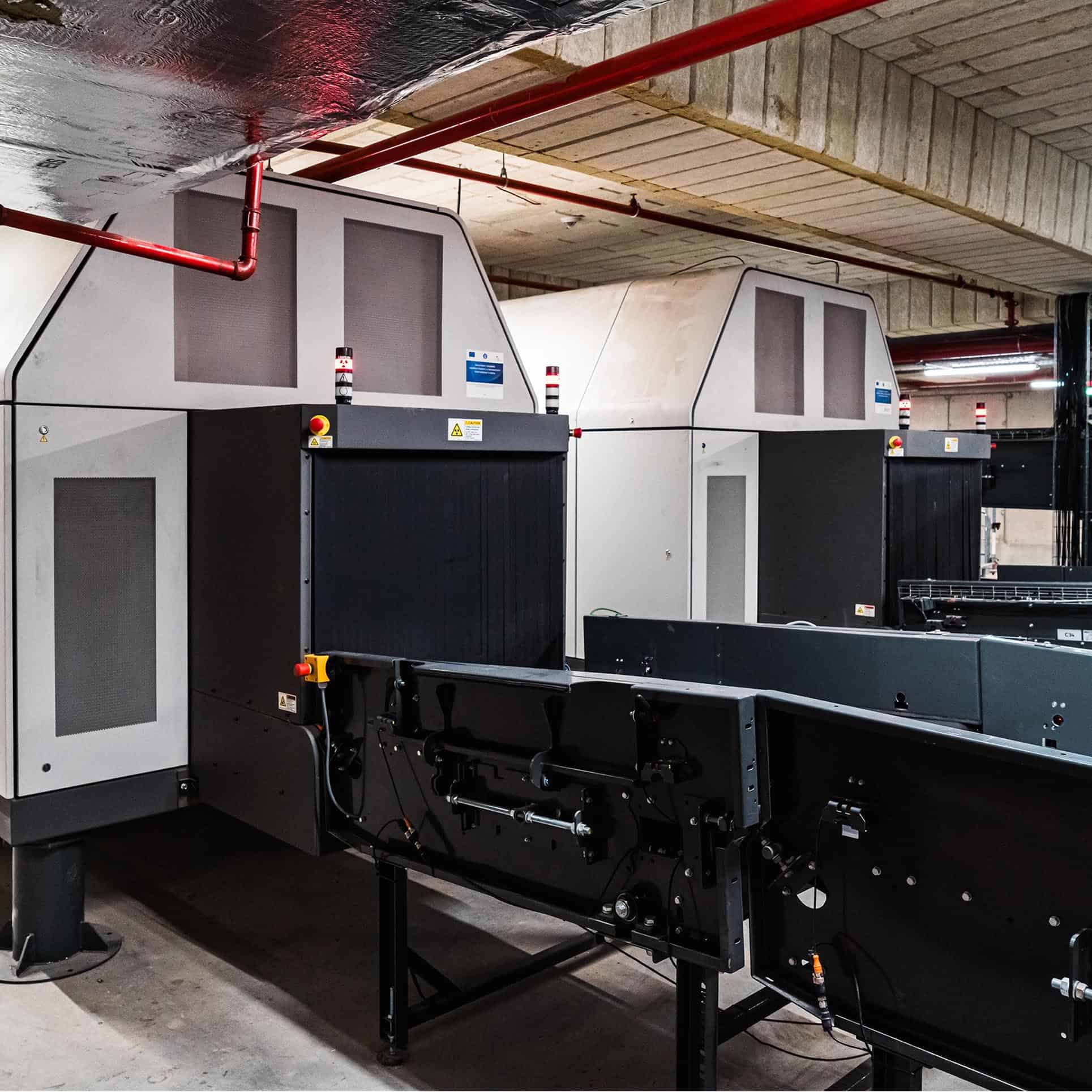
The new equipment differs from previous generations in size, weight, electrical supply requirements and maintenance access conditions. In many projects, these differences require the redesign of the screening zone and adaptation of the existing infrastructure to accommodate the new configuration.
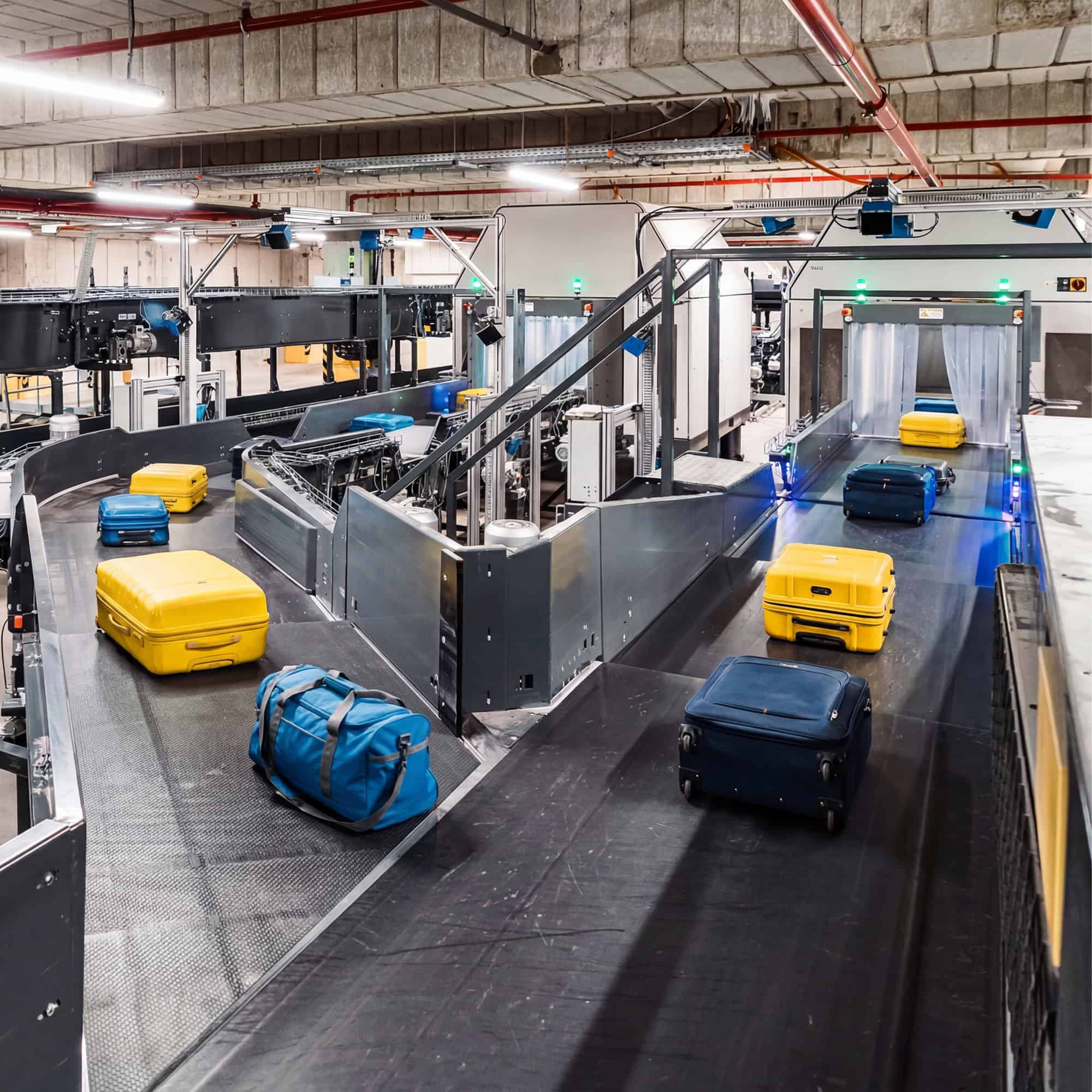
CT scanner integration also affects the overall baggage flow. Throughput does not depend solely on the capacity of the screening equipment, but on how it fits into the existing flow. Conveyor lengths, diverter placement, accumulation zones,and the relationship between screening, the Operator Screening Room (OSR) and the Checked Baggage Resolution Area (CBRA) must be analyzed together to maintain the operational throughput of the entire BHS. Depending on the terminal configuration, even apparently minor changes can affect transport times and overall performance.
Control logic must be adapted in parallel with mechanical and electrical modifications. PLCs (Programmable Logic Controllers), SCADA systems and interfaces with airport applications are redesigned together, because every intervention can affect the performance, availability and maintainability of the entire system. Operational continuity scenarios are also reviewed at this stage, so that the unavailability of a piece of equipment or a screening zone does not generate bottlenecks in the overall baggage flow.
The task of an integrator is not to install CT equipment. It is to build an architecture in which that equipment operates without degrading the throughput, availability, or flexibility of the entire BHS.
2. THE TECHNICAL AUDIT: THE FOUNDATION OF ALL DESIGN DECISIONS
Every retrofit project begins with an assessment of the existing infrastructure. Before selecting equipment or defining the technical solution, it is necessary to understand the actual system configuration, the infrastructure’s limitations and the compatibility between existing components and those to be integrated.
In a greenfield project, the system is designed starting from operational requirements and available space. In a retrofit, the solution is built around what already exists and the technical audit is not a preliminary formality — it is the foundation on which all subsequent design decisions are made.
Technical documentation is a starting point, but rarely reflects the actual system configuration in full. Over an airport’s lifecycle, local interventions, phased upgrades and operational adaptations are not always fully documented. It is not uncommon for the configuration identified on site during the audit to differ significantly from the available drawings. On-site inspections are, for this reason, essential before design work begins.
The infrastructure assessment covers more than conveyors and screening equipment. It encompasses the load-bearing capacity of existing structures, the availability of technical spaces, cable routes, electrical supply and the expansion possibilities of the control architecture. These checks allow the identification of constraints that may affect the technical solution and the implementation schedule. This stage also evaluates the existing infrastructure’s capacity to sustain the operational throughput required after ECAC Standard 3 equipment integration, without bottlenecks or throughput reduction.
In many airports, the upgrade does not involve a complete BHS replacement, but the integration of new equipment into an infrastructure that continues to use conveyors, PLCs, or applications developed at different stages. Defining the interfaces between these components is one of the highest-impact activities in the design phase: incompatibilities not identified in time become costly modifications and operational delays during execution.
3. RETROFIT DESIGN BEGINS WITH UNDERSTANDING THE CONSTRAINTS
Although the objective is the same — ECAC Standard 3 compliance — no two retrofit projects follow the same technical solution. Each airport has its own configuration, a different upgrade history, space constraints, specific operational requirements and a different level of flexibility in its existing infrastructure.
The integrator’s role is to develop an architecture tailored to each airport’s specific context, capable of incorporating the new requirements without compromising the performance of the entire system. This architecture does not start from an equipment catalogue, but from an understanding of these constraints.
Unlike a greenfield project, where the infrastructure is developed to support the chosen technical solution, in a retrofit the solution must be built around an infrastructure already in operation. Available spaces, existing routes, structural capacity, equipment that must be retained and operational continuity all become factors that influence every design decision.
The process involves the ongoing evaluation of engineering trade-offs. Reusing existing infrastructure can reduce the initial investment and implementation duration, but may limit flexibility for future expansions. Completely replacing certain components can improve system availability and maintainability, but increases implementation complexity and the extent of the impact on airport operations. Two airports implementing the same ECAC Standard 3 technology can arrive at entirely different integration solutions. The standard defines the security requirements; the BHS architecture is always the result of engineering decisions made according to each terminal’s specific characteristics.
IESYS treats the BHS as an integrated system, not a collection of independent pieces of equipment. Every design decision is assessed through its impact on the performance of the entire architecture — from baggage flow and control logic to maintenance and expansion possibilities.
4. THE FIVE ENGINEERING DECISIONS THAT DETERMINE PROJECT SUCCESS
In retrofit projects, there are five categories of engineering decisions with a direct impact on long-term system performance.
Mechanical architecture and baggage flows. CT scanner integration must be analyzed in terms of its impact on the throughput of the entire system, not solely on the performance of the screening equipment. Conveyor lengths, accumulation zones, diverters and routing logic form a single whole: optimizing one segment can generate bottlenecks in another area of the BHS.
Civil and electrical infrastructure. The weight of CT equipment, electrical supply requirements and the space needed for operation and maintenance can require significant structural modifications. In many projects, the limitations of the existing structure influence the technical solution more than the specifications of the new equipment.
Control architecture, communications and system interfaces. The compatibility of industrial communication protocols, SCADA integration and the interfaces between existing and new equipment must all be treated as part of the same control architecture. Degraded operating scenarios and the possibility of future expansions must also be provided for from the design phase. The reliability of the entire system depends on how these components work together in every operational scenario.
Implementation and commissioning strategy. The phasing of works, planning of intervention windows and testing strategy directly affect operational risks. In an operational airport, how the implementation is organized is an engineering decision with consequences just as significant as any design decision.
Operation and maintenance. A retrofit must also be designed from the perspective of long-term operation. Maintenance access, equipment monitoring, spare parts availability and the possibility of future expansions affect system costs and availability throughout its entire service life.
5. HOW TO ACHIEVE INTEGRATION WITHOUT DISRUPTING AIRPORT OPERATIONS
In a retrofit project, implementation is not an execution stage separate from design. How the execution is organized is part of the technical solution and must be defined in the same phase as the system architecture.
In an operational airport, the success of the implementation is measured not only by meeting deadlines, but also by the ability to maintain operational continuity throughout the duration of the project. The implementation strategy establishes how the system can be upgraded in phases, through interventions organized by check-in zone or functional BHS segment, with minimal impact on current operations.
Each phase involves the coordination of civil, mechanical, electrical and software works, as well as the progressive integration of new equipment into the existing architecture. In many projects, this requires the simultaneous operation of existing and newly installed infrastructure, the use of temporary configurations and the adaptation of control logic as works progress. Before each phase enters service, equipment interfaces, industrial communications, normal and degraded operating scenarios and the system’s operational performance are all validated.
Projects with the least impact on airport operations are consistently those in which the implementation strategy was treated as an integral part of the design, not as an activity planned after the design was finalized.
6. DESIGNING A SYSTEM READY FOR THE NEXT 20 YEARS
ECAC Standard 3 compliance is the starting condition, not the final objective of a retrofit project. Airports invest in BHS upgrades to secure a functional infrastructure over a 15–20 year horizon and decisions made during the design phase directly affect system costs and availability throughout that entire period.
The technical solution is assessed through the performance of the entire system after the upgrade, not through the isolated characteristics of the installed equipment. The integration of mechanical, electrical and software components must result in a unified architecture, capable of sustaining the required throughput and allowing future expansions without major interventions. At this stage, modifications to the existing infrastructure, testing and acceptance criteria and normal and degraded operating scenarios are all validated, so that the unavailability of a piece of equipment or a screening zone does not affect the operation of the entire BHS.
Expansion capacity, maintenance accessibility, compatibility with future equipment generations and the flexibility of the control architecture are criteria that must be evaluated from the design phase. Added later as adaptations, they generate significantly higher costs and may require interventions that once again disrupt operations.
CONCLUSION
Implementing ECAC Standard 3 puts every component of an operational Baggage Handling System under pressure: mechanical infrastructure, control systems, electrical supply, civil structure and how the execution of works is organized. Airports that treat this upgrade exclusively as a scanner replacement project generally encounter throughput, availability, or maintainability issues after commissioning.
The value of an integrator in these projects lies in the ability to assess the entire existing infrastructure, make sound engineering decisions before works begin and execute the implementation without compromising airport operations. The technical audit, mechanical and control architecture and implementation strategy define BHS performance for the next 15–20 years — not the equipment list in the technical specification.
IESYS designs and integrates Baggage Handling systems for operational airports, including upgrade projects for ECAC Standard 3 compliance, with a focus on system integration and operational continuity throughout implementation.