

The Critical 5: Why Traffic Control Depends on Operational Coherence, Not Data Availability
- Episode 7 -
A monthly insight series by IESYS
Modern ITS environments are no longer limited by a lack of visibility. If anything, it’s the opposite. CCTV cameras continuously monitor critical sections of the road network. Traffic detection systems report changes in flow and speed within seconds. Automatic Incident Detection (AID) systems analyze live video feeds to identify abnormal behavior. Environmental sensors add further operational context.
And yet, a recurring pattern shows up across integrated environments: as the number of information sources grows, the operational picture doesn’t automatically become clearer. Instead, each system generates its own interpretation of the same traffic situation. More visibility doesn’t automatically translate into a shared operational understanding. And it’s the gap between these interpretations that ultimately determines how effectively traffic can be managed.
This is the underlying shift – from technical integration to operational coherence – reshaping how we understand modern ITS environments today. The conversation often starts with expanding data collection, adding new sensors or increasing network visibility. These capabilities matter, but experience gathered from integrated traffic management deployments increasingly shows that they are no longer the main constraint. Once a road authority reaches a certain level of technological maturity, the challenge shifts from collecting information to designing architectures capable of turning distributed observations into a single, coherent operational state, in real time.
So what does that coherence actually depend on? Drawing on our experience across ITS projects, we’ve identified five critical factors that determine whether a traffic environment functions as a single, unified decision system or simply as a collection of connected but disconnected ones.
Critical factor #1: Convergence of information matters, not its volume
One of the most consistent realities of real-time traffic operations is that adding new systems doesn’t automatically improve decision quality. On paper, it increases visibility. Under real operating conditions, the challenge shifts to something else: how quickly signals coming from different systems settle into one shared understanding of what’s happening.
A motorway incident illustrates this well, because it almost never appears as a clearly defined event from the moment it starts to take shape.
An AID algorithm may be the first to flag abnormal traffic behavior: a stopped vehicle, sudden braking, wrong-way movement, or the early formation of a queue. At that point, traffic flow across the wider network may still appear largely unaffected. A few minutes later, inductive loop detectors begin reporting a subtle but consistent speed reduction on the section feeding into the affected point, still within a range that could be read as normal variation, depending on traffic density. At the same time, the ANPR system contributes vehicle identification data useful for correlating traffic activity, while CCTV starts showing intermittent braking and early queue formation — though not consistently across all camera feeds.
None of these signals is wrong. The challenge isn’t accuracy, it’s temporal alignment and system-level convergence.
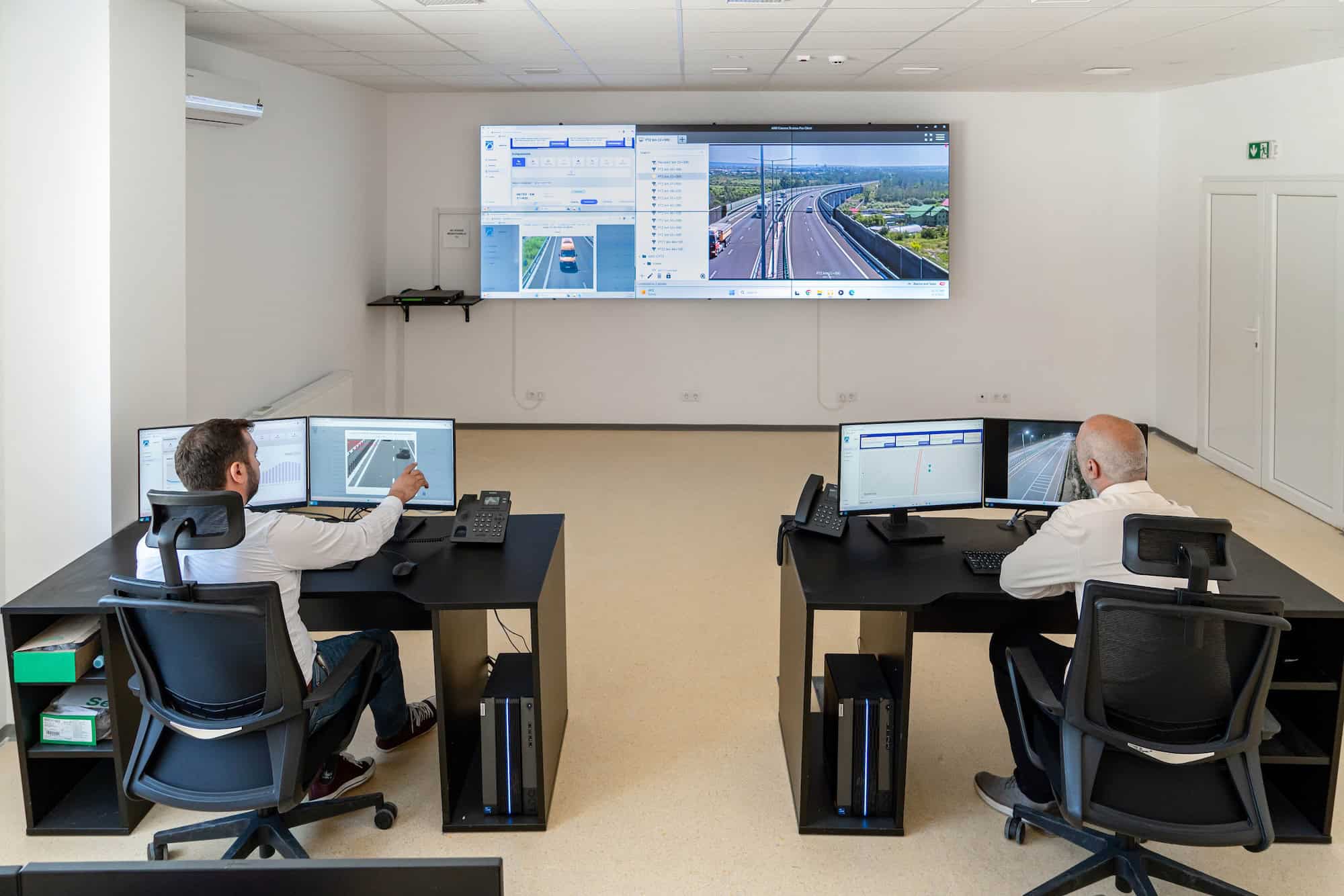
What happens in the control room isn’t a linear analytical process, but a continuous alignment of fragmented information into a single operational state, while the situation is still unfolding. The limiting factor isn’t the availability of information, but the time it takes for data from multiple sources to converge into a stable operational picture. This speed of data alignment increasingly defines a system’s real value under live conditions.
Critical factor #2: Traffic evolves faster than systems can interpret it
Unlike static infrastructure systems, traffic doesn’t stay stable long enough for interpretation processes to complete before the situation changes.
A localized slowdown detected at the start of an event is rarely still the same situation ten minutes later. What initially looks like a minor variation can evolve into corridor-level congestion, with cascading effects on adjacent routes and alternative paths. The central element here is the timing asymmetry between detection layers: inductive loop detectors may already indicate saturation, and AID may have already generated an incident alert based on abnormal behavior, even before congestion becomes fully measurable through traffic detectors. CCTV confirmation typically arrives later, once congestion becomes visible across multiple cameras.
In live environments, this creates a consistent operational pattern: decisions are made based on partial convergence, not full system alignment. Waiting for complete synchronization isn’t feasible, because by the time all systems consistently describe the same situation, the network state has already moved on. This is why convergence speed becomes a critical design parameter for modern ITS architectures.
Operational performance is increasingly evaluated not only by detection capability, but by how fast data from multiple sources stabilizes into a usable operational state.
Critical factor #3: The same event, seen differently by each system
No single ITS system describes a traffic event in full. Each provides a partial, but valid, representation of the same operational reality.
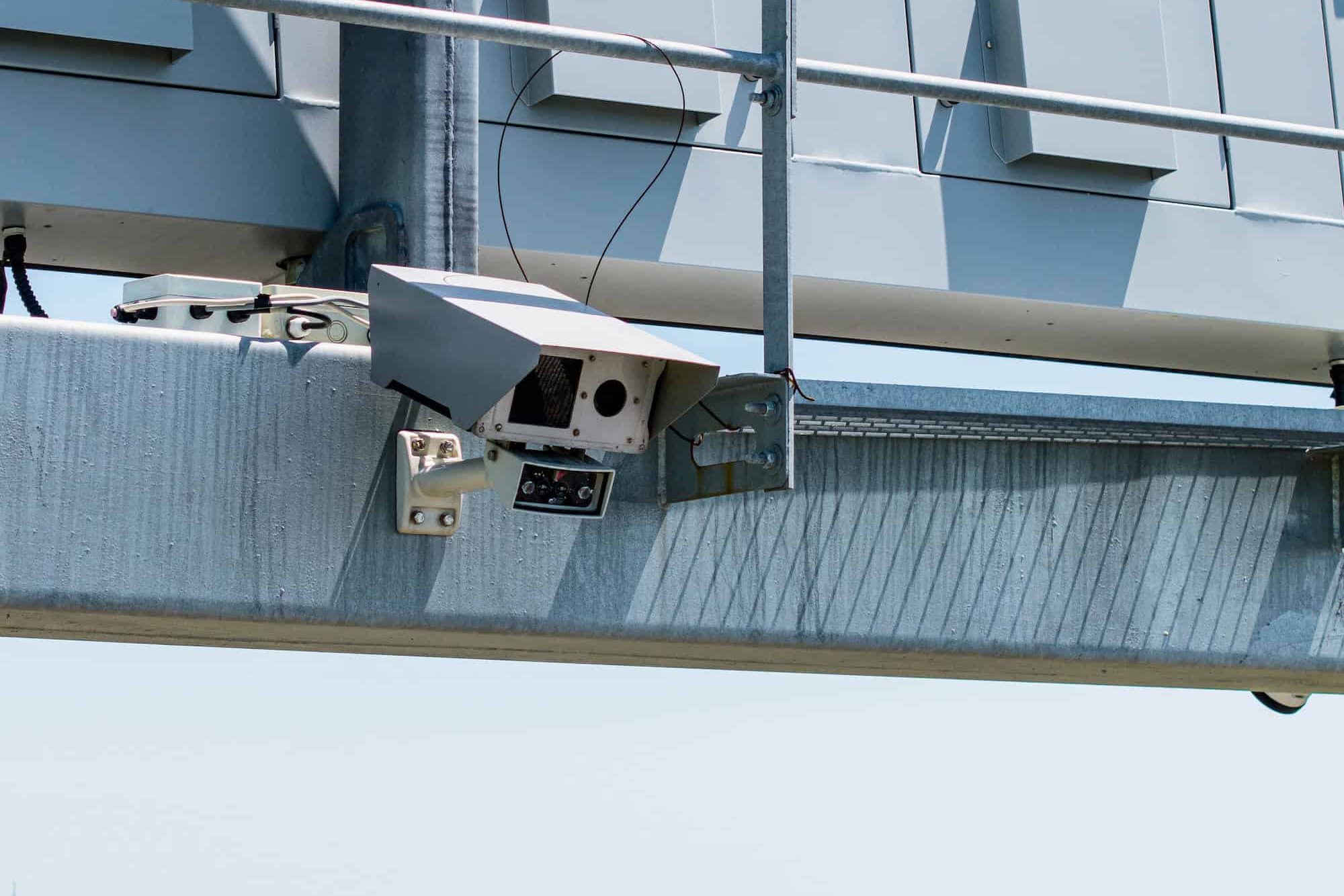
Traffic detection systems capture variations in speed and flow, but not causality. CCTV provides continuous visual coverage. Automatic Incident Detection complements CCTV through real-time video analysis, identifying behavioral anomalies: stopped vehicles, wrong-way driving, pedestrians on the carriageway, debris, or sudden queue formation. ANPR provides reliable vehicle identification through automatic number plate recognition, supporting traffic enforcement and overall operational awareness. Environmental sensors provide contextual, not causal, information.
As a result, the same event exists simultaneously across multiple system representations. A congestion event may first appear as an AID alert flagging abnormal traffic behavior. Shortly after, inductive loop detectors begin reporting speed reductions on the section behind the affected point. ANPR contributes vehicle identification data that rounds out the operational picture, while CCTV confirms the physical formation of the queue only once the event has already moved into an active state of congestion.
In real operating conditions, this staggered emergence of information isn’t an anomaly, it’s an inherent property of distributed detection architectures. A system’s maturity is increasingly measured by its ability to bring together information from different sources about the same event into a single, coherent operational state, rather than treating it as competing interpretations. The architecture needs to recognize that an AID alert, a speed reduction on the section behind the incident, and a CCTV confirmation are, in fact, observations of the same event and to present that unified understanding to the operator, rather than three separate alerts.
Critical factor #4: Integration challenges surface after go-live, not before
During design and implementation, ITS integration is typically validated as a technical milestone: systems exchange data, interfaces work correctly, events propagate across platforms. Integration passes the test.
The real measure of integration, however, only shows up under actual traffic conditions, where multiple incidents overlap and timing differences become operationally relevant. That’s when the control environment changes fundamentally.
An incident may first be identified through an AID alert, while traffic detectors still show only subtle flow changes, and CCTV hasn’t yet provided visual confirmation clear enough for the operator to validate. Meanwhile, an operational response may already be required, because waiting for complete system alignment is rarely practical. This reveals an essential architectural truth: integration ensures connectivity, but it doesn’t guarantee operational convergence or a shared understanding of the evolving traffic situation.
Over time, a system’s value depends not just on the quality of technical integration, but on how effectively the architecture supports consistent operational interpretation under dynamic conditions. The purpose of integration isn’t simply to exchange data between subsystems, it’s to allow operators to make confident decisions before the traffic situation evolves further. The effectiveness of a Traffic Management Centre isn’t determined only by what its systems detect, but by how quickly operators can turn that information into coordinated action.
This is increasingly reflected in how modern ITS environments are specified today, moving beyond integration milestones toward measurable operational behavior under real conditions. Specifications now include targets for decision latency, thresholds for convergence speed, and metrics for the interpretation effort required from the operator. These are no longer optional, they’re baseline performance requirements.
Critical factor #5: Operational control depends on shared understanding, not on the number of systems
The goal of any ITS environment isn’t visibility, it’s control. Visibility means information is available. Operational control only becomes possible once distributed observations converge into a shared, actionable understanding of network conditions.
In mature traffic management environments, performance depends on how well all systems contribute to a unified understanding of the network, under constantly changing conditions. Without this alignment, even highly advanced infrastructure functions as parallel streams of information, rather than as a coordinated decision environment.
A key operational factor is a system’s ability to quickly correlate distributed information into a shared operational picture. Under real conditions, efficiency is no longer determined solely by how fast data is generated, but by how quickly it converges into a common basis for decision-making.
At this level, the critical design variable is no longer the number of systems, but their coherence, specifically, how reliably that environment produces a unified operational state under uncertainty. The distinction matters: two well-designed systems that converge quickly into a shared operational picture will outperform five systems generating parallel, inconsistent interpretations.
From technical systems to operational responsibility
Convergence of information, timing asymmetry, multiple representations of the same event, the difference between connectivity and coherence and control depending on shared understanding, these are the five factors that, in our experience, determine whether an ITS environment truly functions as a unified decision system.
Across mature ITS environments, one conclusion becomes increasingly clear: the limit is no longer data availability or system coverage. Modern infrastructure already provides more information than can be fully processed in real time.
The real constraint is whether that information can be aligned into a single, coherent operational state fast enough to stay relevant as the situation evolves. Traffic control doesn’t depend on the number of systems installed or the volume of data generated. It depends on whether those systems describe the same operational reality consistently and in time alignment, under dynamic conditions. This is where traffic management moves beyond simple monitoring and becomes genuine support for operational decision-making. At the center of this shift is the Traffic Management Centre’s ability to turn distributed observations into a coherent operational picture that supports timely operator decisions.
In more advanced deployments, this shift is increasingly reflected in how systems are specified and evaluated, not just at the level of integration, but at the level of decision latency, operational coherence, and the speed of convergence, from distributed data to a unified operational picture.
How IESYS Group approaches operational coherence
The shift toward coherence-driven thinking requires a fundamental change in how systems are designed and validated. Rather than optimizing each system’s performance in isolation, the focus shifts to ensuring that all components, detection, visualization, data fusion, the operator interface, work together as a single, unified decision-support environment.
This is how IESYS Group approaches ITS architecture. We choose systems not just by connectivity or coverage, but by their ability to produce measurable operational coherence under dynamic conditions. On the Craiova–Pitești corridor, for example, we integrated real-time video monitoring, automatic incident detection, Weigh-in-Motion systems for freight traffic, and weather-adaptive control, all coordinated through a centralized integrator software platform. The modular architecture was designed precisely so these different information sources would converge into a single operational state, rather than operate as parallel data streams.
The architectural implication is clear: we design the operational layer first,t defining the unified state operators need to see, the decision points that need to be supported and the timing constraints that apply. Only then do we specify the detection and integration layers, so they serve that operational requirement. This reverses the usual sequence, where integration is treated as a technical problem and operational effectiveness as a secondary concern.
When we deploy ITS solutions on complex road corridors or BHS systems in high-traffic airports, the real measure of success isn’t “all systems are connected,” but “how reliably does the operator reach a coherent understanding of current conditions, within the time available to decide.” That distinction is what ultimately determines a project’s outcome.
Strategic implications
In this context, the value of an ITS environment is no longer defined only by what it observes, but by how reliably it produces operational coherence under uncertainty. Operational coherence creates measurable value only when it enables faster, more consistent decisions inside the Traffic Management Centre where the responsibility for coordinating the response to changing conditions still rests with people.
This coherence doesn’t happen by chance. It’s the direct result of engineering decisions made long before a system goes into operation: how detection architectures, convergence thresholds, and operator interfaces are designed. A sound technical decision, made at the design stage, later translates into the certainty with which an operator can act in real time, under pressure. It’s the difference between a system that simply works and one the operator can fully trust.
This is increasingly becoming a defining trait of modern ITS architecture, and of the systems that support it:
How quickly does the system bring multiple data sources into a single operational state? This determines the decision window available to operators.
How consistently does it reduce ambiguity during dynamic incidents? This determines whether interpretation stays fragmented or becomes aligned.
How effectively does it support a coordinated response, rather than parallel interpretations? This determines whether the infrastructure delivers real control, or just visibility.
Systems are no longer evaluated only by connectivity or coverage, but by their ability to function as a unified decision-support environment — one that enables prompt, coordinated, and operationally effective responses. This is the standard against which modern ITS environments are measured today. And it’s the principle that guides every project we take on, from transport networks to baggage systems: the engineering decisions made today are what determine tomorrow’s operational certainty.
The Critical 5 series explores the patterns that define modern infrastructure operations. For more insights on ITS architecture, BHS systems, and operational design, visit our dedicated resources page.