

What Happens to a BHS When the Airport Changes?
- Episode 10 -
A monthly insight series by IESYS
Airport expansion rarely means starting from an empty site and a BHS expansion is no different.
New terminals are being built, existing facilities are being extended and airports are increasing capacity while keeping established infrastructure in operation. For a Baggage Handling System, this changes the engineering problem.
A greenfield BHS can be developed within a new building, the expected baggage flows and the intended operating concept. An expansion has to work within an architecture that already exists: installed equipment, established routes, control logic, screening interfaces, infrastructure constraints and, most importantly, a system that must continue to perform while the airport changes around it. The challenge is to introduce a new configuration without compromising the behavior, control or operational continuity of the existing system.
In an expansion project, the engineering decisions are less about what can be added and more about how the existing system needs to evolve. Five questions become particularly important.
1. Does the passenger forecast tell you enough about the baggage flow?
Passenger numbers give you the scale of an airport, but they do not tell you how the baggage will move through the system.
For a BHS, the important question is what that traffic looks like operationally: when the peaks occur, how departure banks overlap, how much transfer baggage is involved, where baggage enters the system and where different flows come together.
Two airports with similar annual passenger numbers can therefore place very different demands on their baggage systems. The same can happen within one airport when an expansion changes how passengers and baggage are distributed between terminals or processing areas.
The existing BHS was designed around a particular flow pattern. Once that pattern changes, the assumptions behind its original utilization and capacity may no longer hold.
A new check-in area, for example, may increase loading on a shared conveyor section rather than create a local capacity problem. A change in transfer flows can have a similar effect further downstream, at screening, merging or make-up.
For an expansion, the starting point is the baggage flow profile rather than the passenger forecast alone. What matters is where the new flows enter the existing system, how they interact with it and where those interactions are likely to create constraints.
2. Where is the real constraint in the existing BHS?
Knowing that a BHS needs more capacity does not tell you where the problem is.
In an existing system, the constraint is not always where you would expect it to be. A conveyor section may have enough rated throughput, while the actual limitation sits in accumulation, screening, sortation, merging or further downstream.
This becomes particularly relevant when new equipment is connected to an existing BHS. Adding capacity at one point can improve local performance while simply moving the constraint to another part of the system.
A similar situation can occur when an expansion changes the way existing equipment is used. A section that was adequate under the original operating conditions may become the limiting point once it is exposed to a different load or a different combination of operations.
Individual equipment ratings are therefore only part of the capacity assessment. The BHS has to be assessed as a complete operating system, using the expected demand and the way baggage actually moves through it.
The intervention may be an additional conveyor section, but it may just as well involve accumulation, screening, sortation or routing. In some cases, the better solution is to change how existing capacity is used rather than add more of it.
What matters is identifying the constraint and addressing it where it actually occurs.

3. Can the existing BHS support the new operating concept?
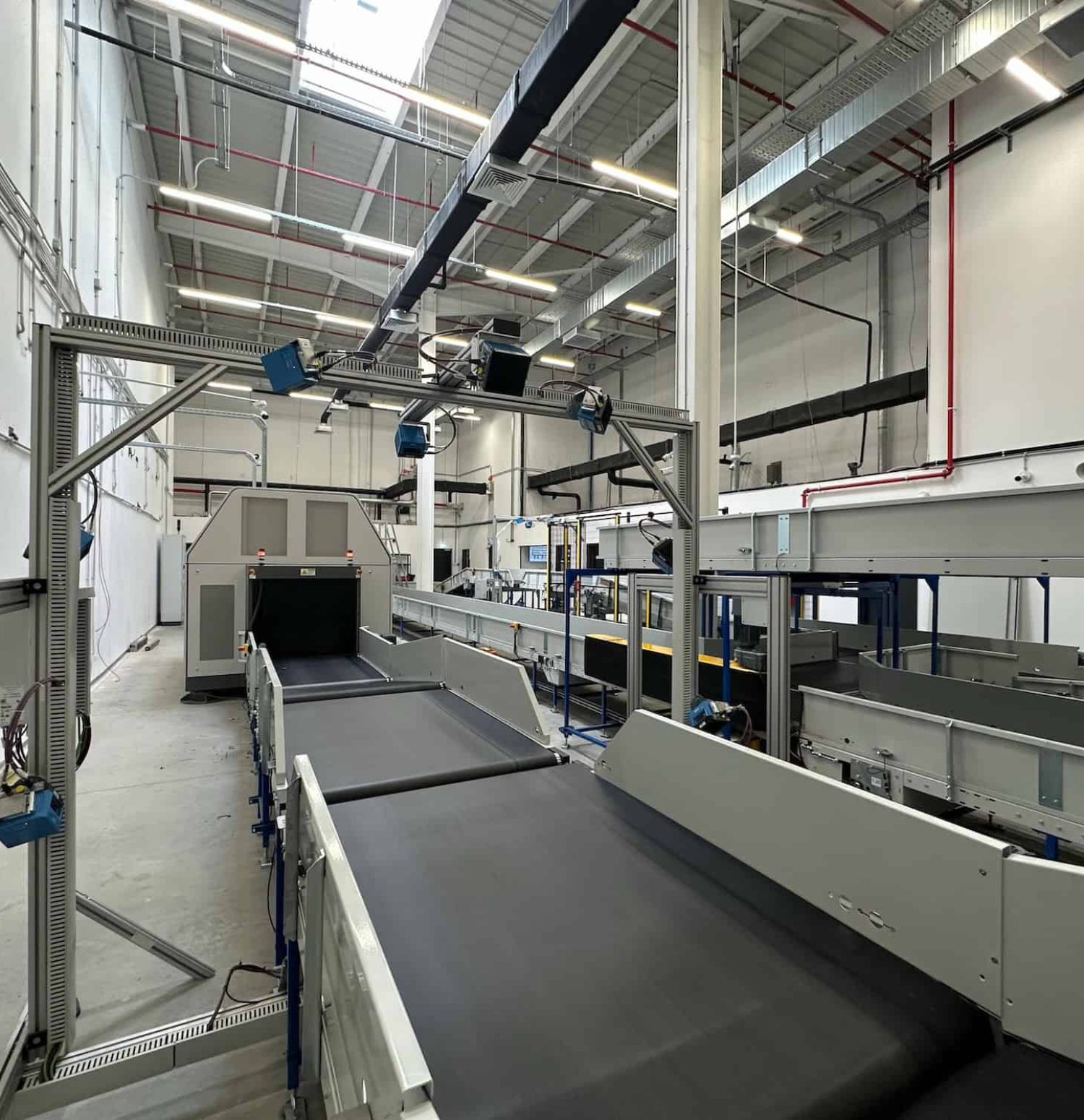
An expansion can change the way a BHS operates without changing the entire conveyor layout. Changes to screening, baggage identification, transfer handling or the way baggage is introduced into the system can place new requirements on the existing control architecture.
A modification that looks local can have effects well beyond the area being changed. A new screening configuration, for example, can affect routing logic, recirculation, baggage traceability and exception handling across the system.
The same applies when new BRS (Baggage Reconciliation System) functionality, transfer processes or airport-system interfaces are introduced. The physical change may be limited, while the control logic and data exchanged across the system need to change with it.
This is where the existing architecture becomes a design constraint. PLC and SCADA, routing software, screening systems and airport IT interfaces all have to work together under the new operating concept.
There is also a practical issue in brownfield projects: the existing system does not always behave exactly as the original documentation suggests. Interfaces evolve, operating practices change and dependencies can sit outside the equipment or software being modified. Those conditions need to be established before changes are designed around the existing system.
The question is whether the resulting architecture can control, route and track baggage as intended under the new operating conditions, not simply whether the new equipment can be connected to the existing BHS.
4. What happens when new infrastructure meets existing infrastructure?
In an expansion project, the new BHS has to fit into an airport that is already there.
New terminal structures, power distribution, communications, IT infrastructure and baggage equipment have to connect with systems that were designed, installed and commissioned at a different stage of the airport’s development. Many of those systems may also need to remain in operation throughout the project.
The challenge is not just making the physical connections. Existing infrastructure can determine where equipment can be installed, how cables can be routed, what access is available for maintenance and how new systems can be integrated without affecting what is already operating.
The same is true for system interfaces. A new baggage handling section may depend on existing power or communications infrastructure. A change in screening may require modifications to both the physical connection and the associated control or data interface.
These dependencies can be easy to miss when each system is considered separately. At BHS level, however, they can determine whether the new configuration can actually be installed, commissioned and operated as intended.
There is often another constraint: access. In an operating terminal, the technically simplest route for a new conveyor, cable or service connection may not be available during normal airport operations. Installation and maintenance access can become part of the system design, particularly where work has to be carried out in short operational windows.
Interfaces need to be defined while the system architecture is still being developed, with the existing infrastructure treated as part of the design rather than as a condition to be checked later.
5. How do you protect operations while the system is changing?
In a live airport, the new BHS has to be built while the existing one keeps moving baggage. Existing routes may need to remain available while new sections are installed. Equipment may have to be introduced alongside live systems, and changes to routing, screening or control may need to be brought into operation progressively rather than through a single cutover.
This creates a series of intermediate configurations, each with its own operational requirements. A temporary routing arrangement may be needed while a permanent section is being installed. A bypass may have to carry flows that normally use equipment under modification. Control changes may need to be introduced in stages so that the system remains predictable throughout the transition.
The sequence matters because changing one part of the BHS can affect routes and processes that remain in service elsewhere in the system. Testing and commissioning also have to account for these intermediate states, not only the final configuration.
This is where transition planning becomes part of the system design.
The final configuration may be straightforward compared with the sequence required to reach it. Each intermediate state has to provide the capacity, control and baggage traceability required for the airport to keep operating. For a live airport, the BHS has to be engineered for two conditions at once: the system carrying baggage today and the configuration being developed for tomorrow.
From airport expansion to BHS engineering
Airport expansion is usually measured in additional passenger capacity, terminal area, gates or facilities. For the BHS, those figures are only the starting point.
An expansion requires more than a final-state design. The existing system, the future configuration and the steps between them all have to work as one engineering problem.
In a live airport, the sequence is part of the BHS design.
Engineering decisions made today determine the operational certainty an airport has tomorrow.
From Challenge to Progress. WE Engineer.
If your airport is planning an expansion, the questions above are worth asking while the engineering decisions are still open. We are always glad to talk them through.