

The Critical 5: Five essential things about security and compliance in critical systems
- Episode 2 -
A monthly insight series by IESYS
In critical infrastructure, security is not optional — it is a condition for operation.
This is even more visible in airports, where every system component must function predictably, in full integration and in compliance with international standards.
Particularly in the area of Baggage Handling Systems (BHS), security and compliance directly impact:
- operational continuity
- passenger flow
- adherence to screening regulations
- the operator’s reputation
At IESYS, our experience in integrating airport and industrial systems has shown that real security begins at the design stage.
Here are five essential aspects to consider:
1. Security is an architectural decision, not an equipment choice
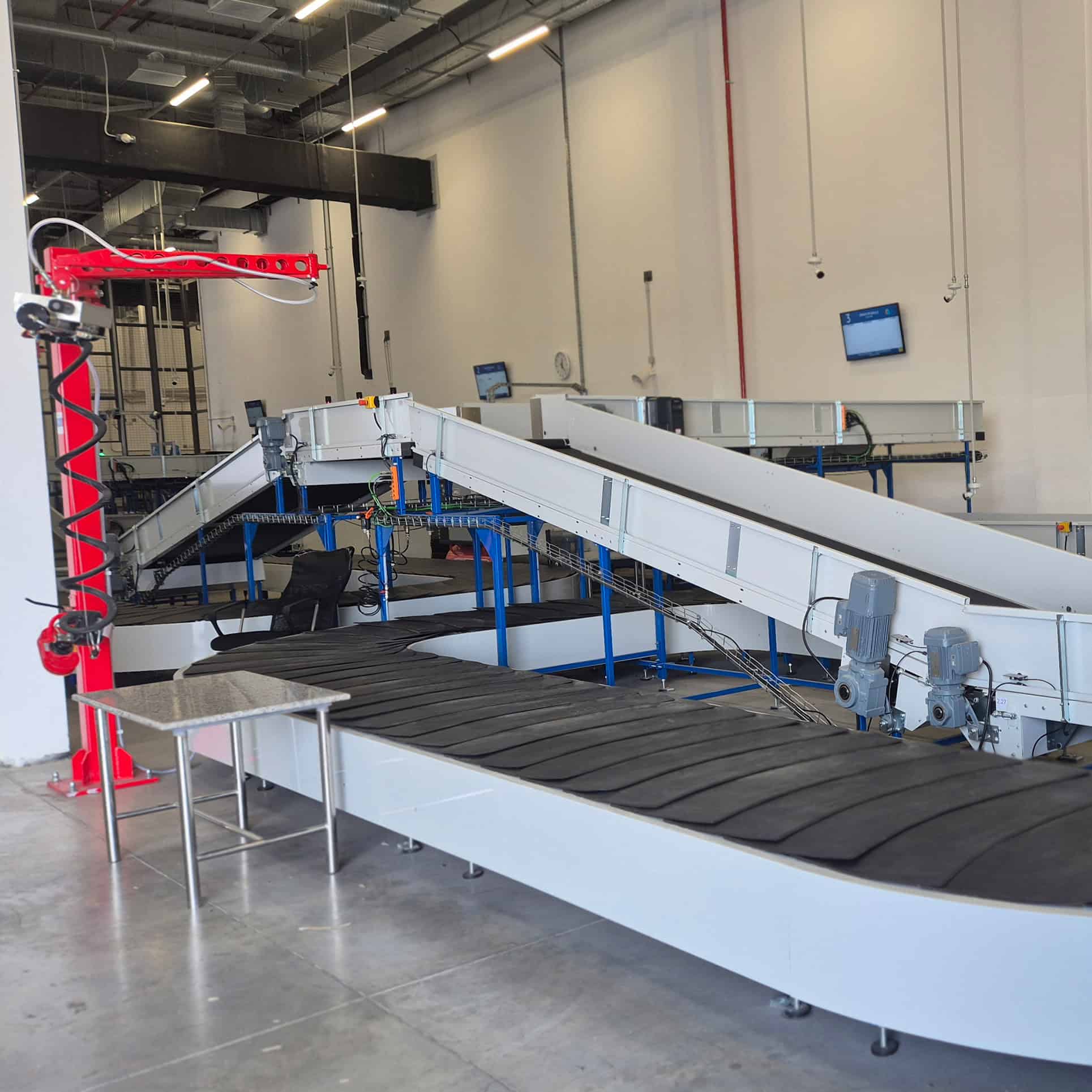
In an airport environment, a BHS is not simply a network of conveyor belts. It is a complex architecture combining:
- mechanical equipment
- industrial control systems
- routing software
- interfaces with screening and security systems
If the architecture is not properly segmented and redundancy is not designed from the outset, risks increase exponentially.
2. Compliance is operational, not merely regulatory
In airport environments, compliance involves:
- meeting screening requirements
- full baggage traceability
- integrated testing before commissioning
- validation of control logic
Documentation alone is not enough. The system must perform reliably under real operational pressure.

3. Integration is the critical point
In airports, systems do not operate in isolation. BHS must communicate with:
- security systems
- passenger information systems
- operational management platforms
- equipment from multiple vendors
Fragmented integration is one of the primary causes of operational incidents.
4. Operational continuity is part of security
A system may be compliant, but it becomes ineffective if it lacks resilience.
In airports, downtime means:
- delays
- bottlenecks
- manual intervention
- direct impact on passengers
Redundancy, failover mechanisms and recovery scenarios must be tested, not just documented.
5. Security is a continuous process
The modernization of airport infrastructure and increasing traffic volumes require periodic reassessment.
Technical audits, software updates, and recurring validation of control logic are all part of a mature security strategy.
Conclusion
In airport infrastructure, security and compliance define system performance.
A well-integrated BHS does more than transport baggage. It ensures flow, predictability, and operational confidence.
If you are managing an airport project or would like to assess the integration and security level of existing systems, the team at IESYS can support you.
Contact us via the form below to schedule a technical discussion tailored to your project.